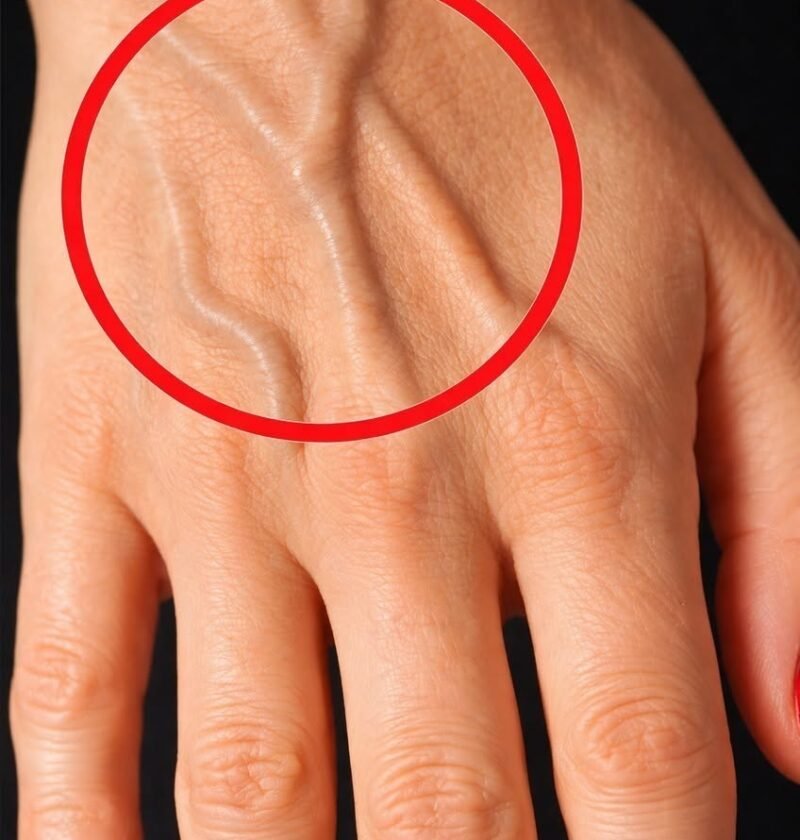
When health and lifestyle headlines tease that “If your veins are visible, it means you are…”—usually followed by a dramatic claim about a hidden vitamin deficiency, severe dehydration, or a terrifying medical condition—they are exploiting a very common bodily insecurity. Because our veins sit just beneath the surface of the skin, noticing them can easily trigger worry that something is wrong.
To separate social media alarmism from clinical reality, let’s look at why veins become visible, what it actually means for your health, and when you should actually pay attention to them.
Why Are Veins Visible in the First Place?
For the vast majority of people, seeing your veins is entirely normal and has nothing to do with a hidden disease. Visibility depends on a combination of biology and anatomy:
-
Skin Thickness and Transparency:
-
Everyone’s skin thickness varies genetically. People with naturally fair, thin, or translucent skin will naturally see the web of superficial veins beneath their skin much more clearly than those with thicker skin or higher natural melanin levels.
-
-
Body Fat Percentage:
-
A layer of subcutaneous fat sits directly underneath your skin. When your body fat percentage drops—whether through fitness, genetics, or weight fluctuations—that insulating layer thins out, bringing surface veins closer to the surface and making them much more prominent (this is why athletes and bodybuilders often have highly visible vascularity).
-
-
Age-Related Changes:
-
As we age, our skin naturally loses collagen, elasticity, and subcutaneous fat, especially on the hands, arms, and legs. This thinning process makes veins appear more noticeable or pronounced over time.
-
-
Hydration, Heat, and Blood Flow:
-
When you exercise, are out in hot weather, or drink plenty of fluids, your blood vessels dilate (expand) to help your body cool down. Increased blood volume and widened vessels push veins closer to the skin’s surface, making them temporarily more visible.
-
When Visible Veins Do Signal a Medical Concern
While normal vein visibility is just anatomy, certain types of prominent veins indicate underlying vascular issues that deserve medical attention:
-
Varicose Veins:
-
What They Are: Gnarled, enlarged, twisted, and bulging veins—usually appearing on the legs and feet.
-
Why They Happen: Tiny, one-way valves inside your veins weaken over time, causing blood to flow backward and pool in the lower limbs instead of smoothly returning to the heart.
-
When to See a Doctor: If your varicose veins are accompanied by aching, throbbing heaviness, swelling in the lower legs, skin discoloration, or ulcers, a vascular specialist can evaluate them.
-
-
Spider Veins (Telangiectasia):
-
What They Are: Smaller, thread-like red, blue, or purple networks of blood vessels visible close to the surface of the skin (often on the thighs or face).
-
The Reality: While they can be a cosmetic annoyance, they are usually harmless and caused by genetics, prolonged standing, or hormonal shifts.
-
The Bottom Line
If you’ve suddenly noticed the veins on your hands, arms, or chest, it is almost certainly a harmless reflection of your skin thickness, body composition, temperature, or normal aging—not a mysterious medical red flag.
Are you noticing visible veins in a specific area, or were you trying to decode a particular health claim you saw online?