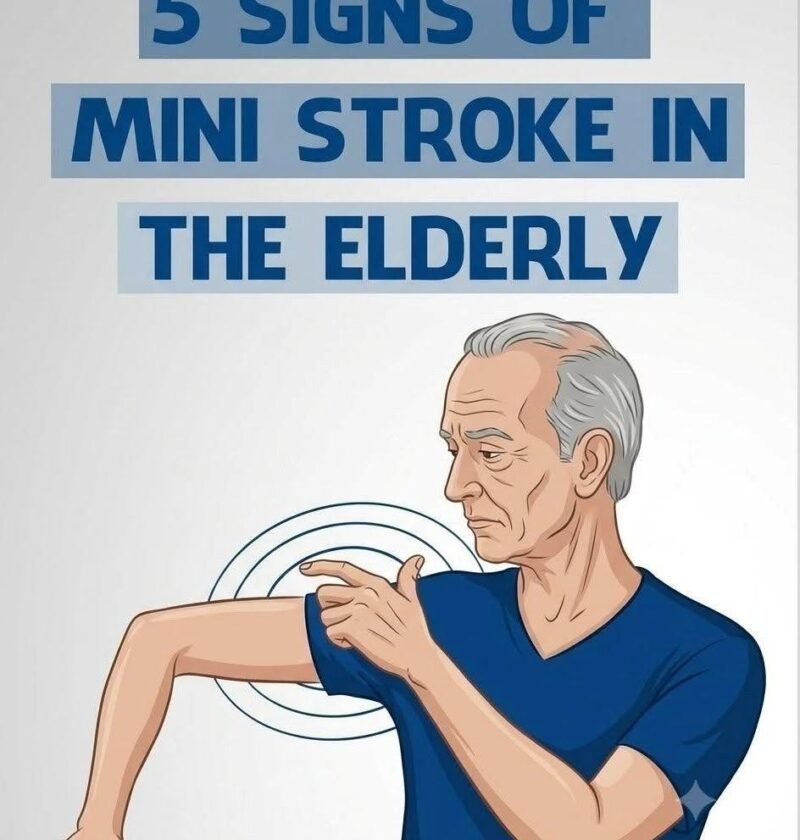
When health headlines warn about mini-strokes (clinically known as Transient Ischemic Attacks, or TIAs) and list a series of symptoms you “should never ignore,” they are addressing a genuinely critical medical topic. Unlike viral health myths, the medical community agrees: a TIA is an emergency warning sign that requires immediate attention.
However, sensationalized articles often blur the lines between a true mini-stroke and random everyday fatigue, creating unnecessary panic or masking the actual signs that demand urgent care.
To separate internet alarmism from clinical reality, here is what a mini-stroke actually is, the signs you should genuinely know, and why ignoring them is dangerous:
What Is a Mini-Stroke (TIA)?
A Transient Ischemic Attack occurs when a blood clot temporarily blocks an artery supplying blood to part of your brain.
-
The Key Difference: In a full stroke, the blood blockage is prolonged, resulting in permanent brain cell death. In a TIA, the blockage clears up on its own very quickly—usually within a few minutes to an hour—and symptoms vanish completely, leaving no permanent neurological damage.
-
Why It’s a Ticking Clock: Just because the symptoms go away doesn’t mean everything is fine. A TIA is a massive “warning shot.” Up to a third of people who have a TIA will go on to have a full, disabling stroke within a year, with the highest risk occurring in the days and weeks immediately following the episode.
The Real Signs You Should Never Ignore (The FAST Test)
While clickbait articles often pad their lists with vague symptoms like “feeling tired,” “a mild headache,” or “brain fog” to make everyday stress look like a stroke, true stroke and TIA symptoms involve a sudden, focal loss of brain function.
Doctors rely on the FAST acronym to spot warning signs:
-
F – Face Drooping: Does one side of the face droop, or is it numb? If the person smiles, is the smile uneven?
-
A – Arm Weakness: Is one arm weak or numb? If the person tries to raise both arms, does one drift downward?
-
S – Speech Difficulty: Is their speech slurred, are they unable to speak, or are they hard to understand? Can they repeat a simple sentence?
-
T – Time to Call 911: If you observe any of these signs—even if they disappear after five minutes—call emergency services immediately.
Other sudden warning signs can include:
-
Sudden confusion or trouble understanding speech.
-
Sudden trouble seeing in one or both eyes.
-
Sudden trouble walking, loss of balance, or dizziness.
-
A sudden, severe headache with no known cause.
What to Do in an Emergency
-
Do Not Wait to See If It Passes: Because a TIA mimics the exact onset of a major stroke, there is no way to tell at home whether a blocked artery will clear itself or cause permanent damage.
-
Get to an Emergency Room: Hospital staff can perform a rapid CT or MRI scan and evaluate blood flow to prevent a catastrophic secondary stroke.
Are you looking up these symptoms out of concern for a recent sudden event, or are you gathering general health information?