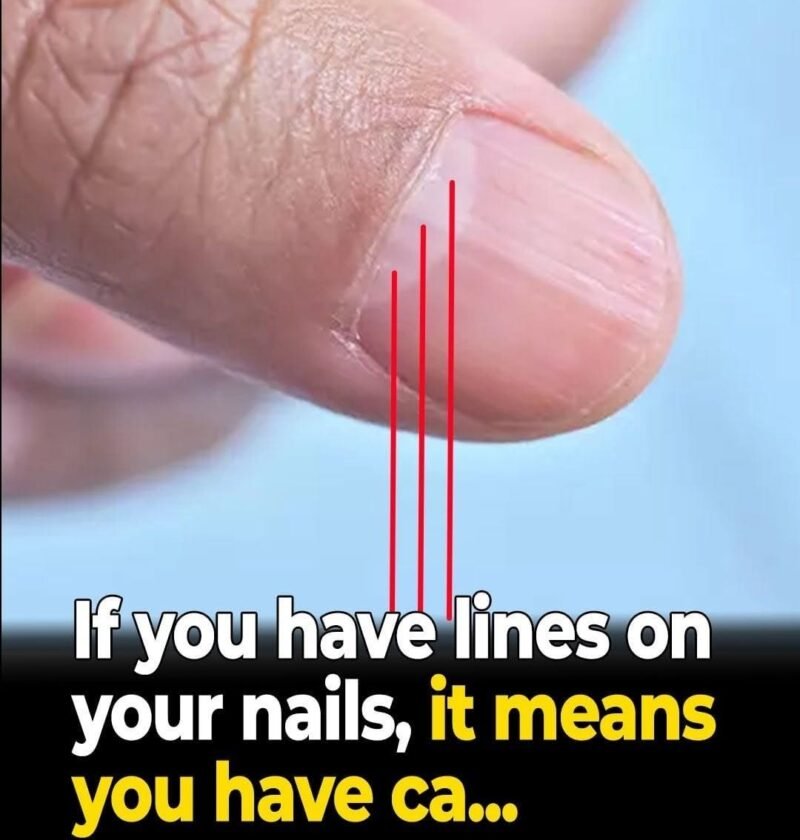
When medical experts talk about a telltale sign in your fingernails that can reflect your biological age or overall health trajectory, they are usually pointing to the rate of your nail growth, alongside certain structural changes that act as a window into your systemic health.
Prominent longevity researchers, such as Harvard geneticist Dr. David Sinclair, have highlighted nail growth as a fascinating external marker of cellular regeneration.
1. The Key Sign: The Rate of Nail Growth
Your fingernails are made of keratin, a protein produced by rapidly dividing cells under your cuticles. How fast your cells regenerate dictates how quickly your nails grow.
-
The Aging Connection: Research shows that average fingernail growth peaks in young adulthood and progressively slows down as you age (dropping by roughly 0.5% per year after age 25, or up to 50% over a lifetime).
-
What it means: A slower growth rate reflects a decline in your body’s overall cellular turnover, metabolic efficiency, and regenerative capacity. While it doesn’t give an exact expiration date, tracking how quickly your nails bounce back and grow can serve as a personal gauge of how well your body maintains its cellular vitality.
Other Serious Fingernail Warning Signs to Watch For
Beyond growth speed, physicians frequently look at the shape, texture, and color of your nails to spot internal health conditions that impact long-term wellness:
-
Nail Clubbing (Cardiovascular & Pulmonary Health): If your fingertips widen and swell, and your nails curve downward sharply like an upside-down spoon, it’s known as clubbing. This occurs when low oxygen levels persist in the bloodstream and is often linked to chronic lung diseases (like COPD or lung cancer), heart conditions, or gastrointestinal disorders.
-
Spoon Nails (Anemia): Nails that are thin and scoop inward (koilonychia) are frequently a classic indicator of iron-deficiency anemia or systemic processing issues with iron.
-
Horizontal Ridges (Beau’s Lines): Deep grooves running side-to-side across the nail happen when growth is temporarily interrupted by severe physical stress, systemic illness, or kidney problems.
-
Severe Discoloration: Persistent yellowing, stark white bands, or dark vertical lines can sometimes point toward underlying metabolic issues, thyroid disorders, or—in the case of changing dark stripes—melanoma under the nail bed.
Summary
While a catchy headline about “predicting life expectancy” simplifies things, your nails are essentially an external dashboard for your body’s internal plumbing and cellular health. Paying attention to sudden changes in how your nails grow, look, or feel can provide an early warning to check in with a doctor.
Have you noticed a recent change in the growth speed, texture, or appearance of your nails?