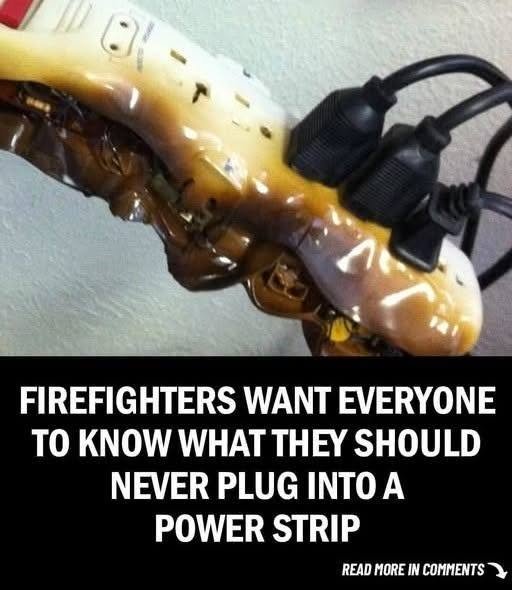
Power strips are convenient for managing electronics like phone chargers, lamps, and laptops, but they are not designed to handle heavy-duty appliances. Plugging high-wattage or motor-driven devices into a power strip can easily overload the circuit, melt internal wiring, or cause a serious electrical fire.
As a general rule of thumb: If it generates heavy heat or runs a heavy motor, plug it directly into a wall outlet.
1. Heating and Climate Control Devices
-
Space Heaters: One of the leading causes of power-strip fires. They continuously draw a massive amount of power (often around 1,500 watts), which pushes most strips past their limits.
-
Portable or Window Air Conditioners: AC units pull heavy electrical spikes when their compressors kick on. This sudden surge can easily overwhelm a power strip.
2. High-Draw Kitchen Appliances
-
Microwaves: They demand intense bursts of energy (typically 1,000 to 1,500 watts) that standard strips cannot safely support.
-
Coffee Makers and Toasters/Toaster Ovens: Any appliance with a heating element uses a tremendous amount of electricity to heat up quickly.
-
Air Fryers and Slow Cookers: Like toasters, these mini-ovens draw continuous high heat and wattage.
3. Large Household Appliances
-
Refrigerators and Freezers: While they may not use high heat, their compressors cycle on and off all day, drawing sharp current spikes with every cycle that can ruin the strip or the appliance.
-
Washing Machines and Dryers: These heavy-duty machines require massive current loads (and often 240V lines) that require dedicated wall circuits.
4. Personal Care Tools
-
Hair Dryers, Curling Irons, and Straighteners: These tools combine high-wattage heating elements and are frequently used near water sources in bathrooms, making power strips a dangerous choice.
5. Workshop Equipment
-
Power Tools (Saws, Drills, Sanders): Heavy-duty motors create massive power surges when first turned on, which can easily overheat a standard power strip.
6. Other Power Strips (Daisy-Chaining)
-
Extension Cords or Other Power Strips: Plugging one power strip into another (or into an extension cord) is called daisy-chaining. It multiplies the electrical load on a single wall socket and is one of the most common causes of residential electrical fires. Always plug a power strip directly into a wall outlet.
Safety Tip: Always check the wattage requirements of your devices and the capacity rating of your power strips. If you notice a power strip or cord feeling warm to the touch, unplug the devices immediately—it is a sign of an overload.