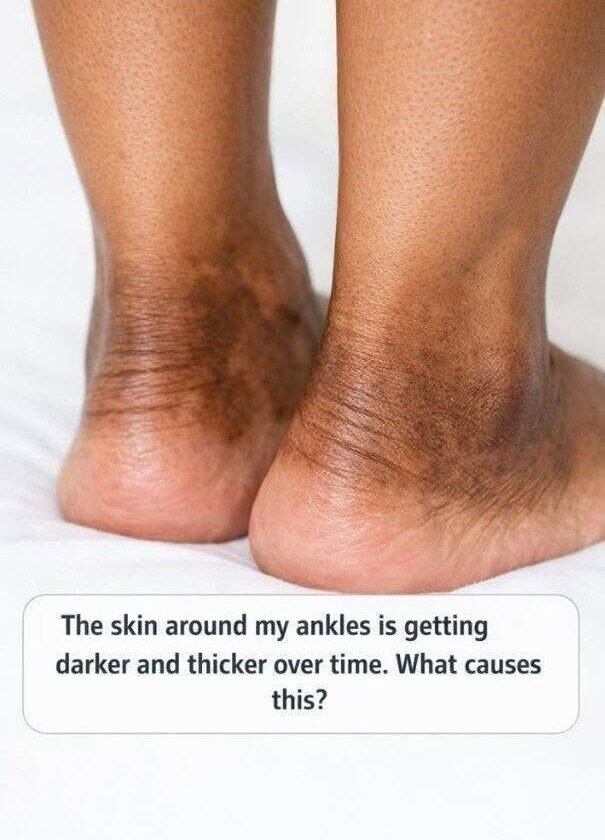
The location, texture, and whether both ankles are affected can help narrow down the cause.
Possible causes
This is particularly important when the skin becomes progressively brown, thick, itchy, or swollen around the inner ankles. It may be a condition called venous stasis dermatitis. It can worsen over time if the underlying circulation problem is not treated.
Repeated itching, scratching, friction from footwear, or reactions to creams and soaps can cause inflammation and gradually darken and thicken the skin.
These can cause certain areas of skin to become darker and thicker, although this is more typical around the neck, armpits, and groin than the ankles.
An old injury, persistent rash, or other inflammation can leave lasting dark pigmentation.
What you should do
Because the changes are getting worse over time, arrange an appointment with a doctor or dermatologist. If you also have swelling or visible varicose veins, mention these specifically; an examination of your leg circulation may be needed.
In the meantime:
-
Moisturize with a fragrance-free cream.
-
Avoid scrubbing, bleaching products, toothpaste, or harsh home remedies.
-
If your ankles swell, elevate your legs when resting.
-
Avoid starting tight compression stockings until a clinician has assessed whether they are appropriate for you.
Seek urgent medical attention if one leg suddenly becomes swollen, painful, warm, or red. Get prompt care for open sores, spreading redness, or pus.
A few questions to narrow it down
2. How does the skin feel?
3. Do your ankles or lower legs swell?
4. Where is the dark skin most noticeable?
Discuss my symptoms
Your answers can help distinguish a circulation-related skin condition from eczema or other causes, although an in-person examination may still be necessary.