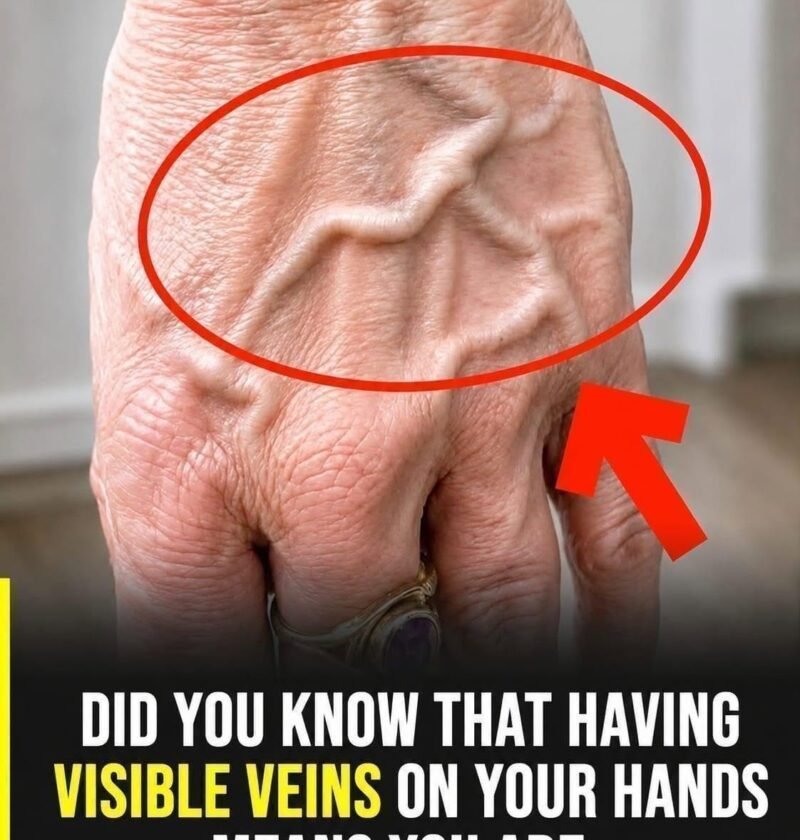
If you’re seeing a headline like “Visible veins mean you are…”, don’t assume prominent veins automatically indicate a disease. Visible veins are often completely normal, particularly in people with lower body fat, muscular arms/legs, fair skin, or after exercise or exposure to heat.
When visible veins are usually harmless
Veins can become more noticeable because of:
-
Exercise or physical activity
-
Hot weather or a hot shower
-
Weight loss or naturally low body fat
-
Aging, as skin becomes thinner
-
Genetics
-
Temporary dehydration
When to pay attention
A new or unusual change deserves medical attention if a vein becomes:
-
Painful, warm, red, or swollen
-
Hard or tender to touch
-
Suddenly prominent in only one arm or leg
-
Associated with significant swelling of the limb
-
Associated with chest pain or unexplained shortness of breath
These symptoms can sometimes occur with a blood clot (deep-vein thrombosis) or another circulation problem.
Prominent veins on the chest or abdomen, especially when newly appearing alongside abdominal swelling or other illness, can also warrant medical assessment.
So, visible veins alone aren’t a reliable sign of “good” or “bad” health. What matters is whether they’re new and whether there are accompanying symptoms.