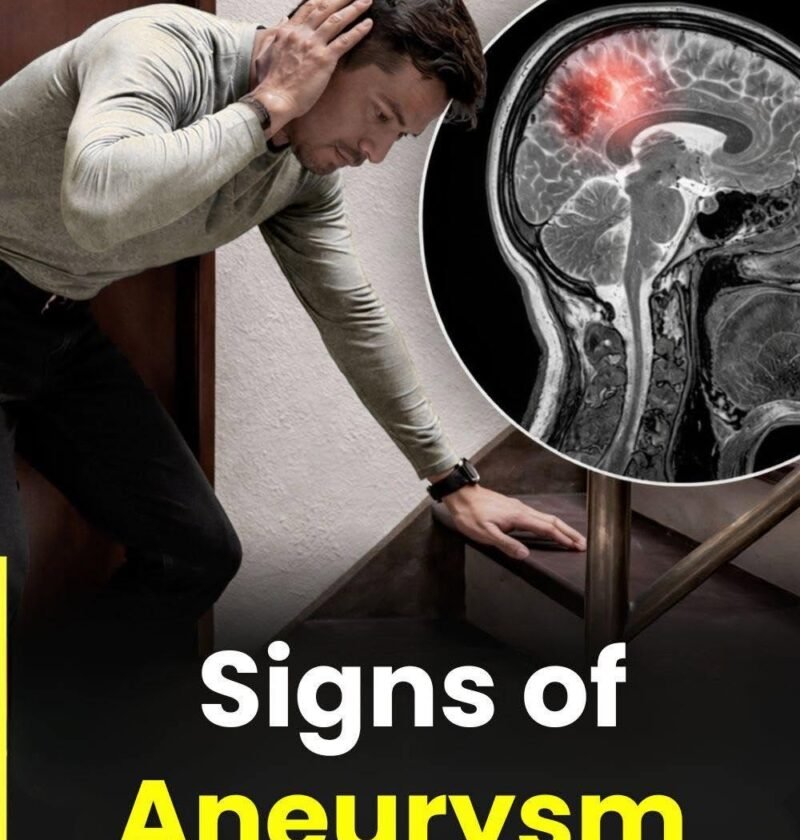
Warning Signs of an Aneurysm in Men: What You Should Never Ignore
An aneurysm is a weakened area in an artery that bulges outward. Many aneurysms cause no symptoms until they rupture, which is why knowing the warning signs can be important.
Possible warning signs
The symptoms depend on where the aneurysm occurs.
-
Sudden, severe headache — A sudden “worst headache of my life,” especially with vomiting, neck stiffness, confusion, weakness, or loss of consciousness, can occur with a ruptured brain aneurysm.
-
Sudden vision problems or pain around an eye can occur with some brain aneurysms.
-
Sudden weakness, numbness, trouble speaking, or facial drooping requires emergency assessment because it can also indicate a stroke.
-
Persistent abdominal or back pain can occur with an abdominal aortic aneurysm.
-
A noticeable pulsating sensation or lump in the abdomen can sometimes occur with an abdominal aortic aneurysm.
-
Sudden severe abdominal or back pain with dizziness, fainting, sweating, or rapid heartbeat can indicate rupture of an aortic aneurysm and is an emergency.
-
Chest or upper-back pain can occur with an aneurysm involving the thoracic aorta.
Who is at greater risk?
Risk factors for abdominal aortic aneurysm (AAA) include older age, male sex, cigarette smoking, high blood pressure, atherosclerosis, and a family history of AAA.
Importantly, most people with an aneurysm don’t experience a distinctive warning symptom beforehand. Screening and medical evaluation of people at higher risk can therefore be more useful than waiting for symptoms.
🚨 When to call emergency services
Seek emergency care immediately for sudden severe headache, sudden severe chest/abdominal/back pain, fainting, sudden weakness or difficulty speaking, or other abrupt neurological symptoms.
An aneurysm cannot be diagnosed reliably from symptoms alone. Doctors may use imaging such as ultrasound, CT, MRI, or angiography, depending on the suspected location.