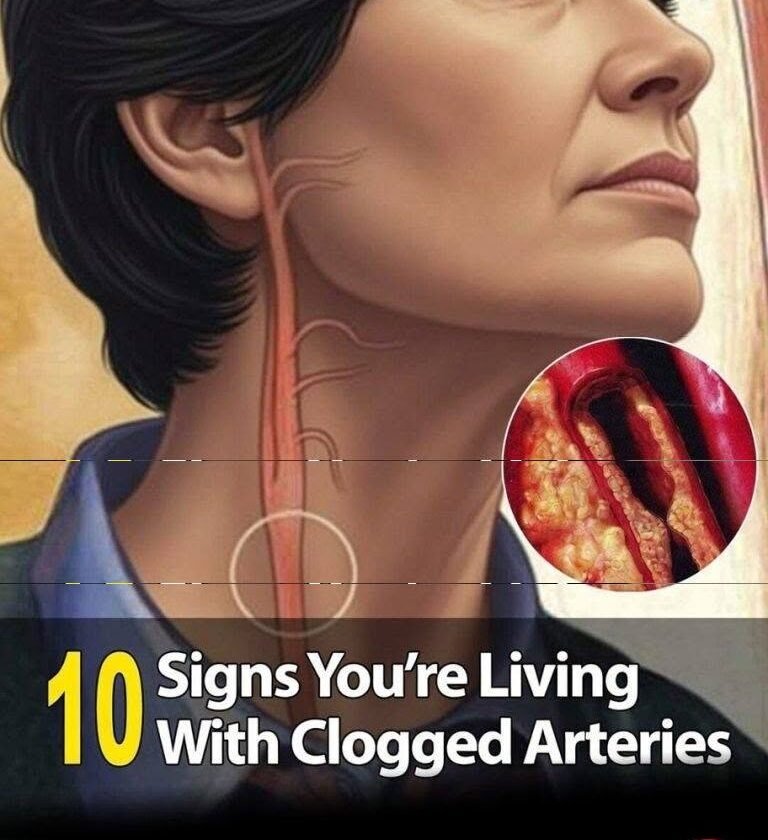
If you’re using this as a health-content topic, “blocked arteries” can refer to different arteries, so symptoms depend on where the narrowing occurs. Atherosclerosis can affect arteries supplying the heart, brain, legs, kidneys, and other organs, and many people have no symptoms until disease is advanced. www.heart.org+1
10 Possible Indicators of Artery Narrowing or Blockage
-
Chest pressure or pain — Especially with exertion; this can be a sign of reduced blood flow to the heart.
-
Shortness of breath — Particularly when accompanied by chest discomfort or exertion.
-
Pain or cramping in the legs while walking — A classic symptom of peripheral artery disease (PAD); it typically improves after resting. www.heart.org
-
Unusual leg heaviness or fatigue — Reduced blood flow can produce aching, weakness, or heaviness during activity. www.heart.org+1
-
Numbness or tingling in a leg or foot — Can occur with reduced circulation, although there are many other possible causes.
-
One foot or leg feeling colder than the other — A possible sign of reduced arterial blood flow. www.heart.org
-
Slow-healing sores on the feet or legs — Poor circulation can make wounds difficult to heal. www.heart.org
-
Changes in skin color — Affected feet or legs may become unusually pale, bluish, or darker. www.heart.org
-
Reduced hair or nail growth on the legs — This can occur with chronic poor circulation. www.heart.org
-
Sudden neurological symptoms — Sudden facial drooping, weakness or numbness on one side, trouble speaking, or vision problems can indicate a stroke caused by interrupted blood flow to the brain.
🚨 Don’t wait with emergency symptoms
Chest pressure/pain, severe shortness of breath, or sudden stroke symptoms require emergency medical attention. Don’t try to diagnose an arterial blockage from symptoms alone.
Also, leg symptoms aren’t necessarily caused by blocked arteries. PAD is usually evaluated with a medical history and examination and may involve an ankle-brachial index (ABI) or vascular imaging. www.heart.org+1
A more medically accurate headline would be:
“10 Warning Signs of Poor Arterial Circulation You Shouldn’t Ignore”