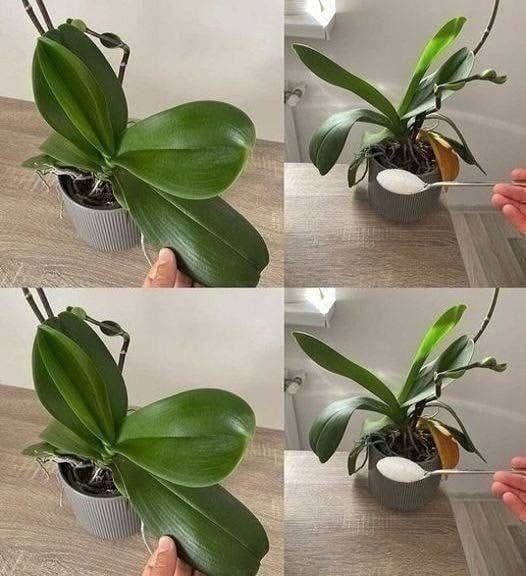
🌸 Orchids: Why a Small Amount of Fertilizer Can Make a Big Difference
Orchids don’t need heavy feeding to thrive. In fact, too much fertilizer can damage their roots, while a modest, consistent supply can support healthy leaves, roots, and flowering.
🌱 Why a little fertilizer helps
Orchids need nutrients such as nitrogen, phosphorus, potassium, and several micronutrients. Their growing medium often provides relatively little nutrition, especially when it’s mostly bark or another inert material.
A small amount of appropriate fertilizer can help support:
- New leaf and root growth
- Stronger plants
- Flower production when the plant is otherwise healthy
- Recovery after repotting once the plant has re-established
💧 How to fertilize safely
For many commonly grown orchids such as Phalaenopsis:
- Use a balanced orchid fertilizer.
- Follow the manufacturer’s dilution instructions rather than guessing the amount.
- Fertilize during active growth rather than continually increasing the dose.
- Water appropriately and make sure excess water can drain away.
- Periodically flush the growing medium with plain water to reduce accumulated fertilizer salts.
⚠️ More fertilizer doesn’t mean more flowers
Overfertilization can cause salt buildup and root damage, sometimes producing brown or burned-looking roots and leaf tips.
And if an orchid has lots of healthy leaves but isn’t flowering, fertilizer may not be the solution. Light, temperature, watering, and the plant’s natural growth cycle are often more important.
Avoid homemade “fertilizers” such as concentrated baking soda, milk, or sugary mixtures. They aren’t reliable sources of orchid nutrition and may harm the roots or encourage microbial growth.
Bottom line: With orchids, think “little and consistent,” not “more is better.” A healthy root system and suitable light are the foundation for good flowering.