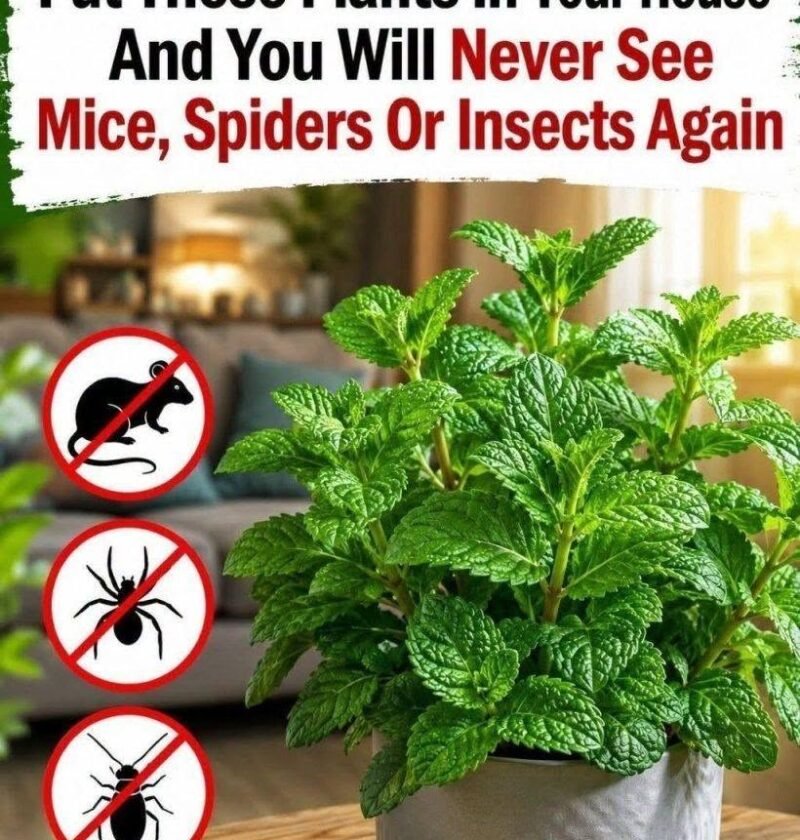
Some plants have strong scents that may discourage certain insects, but the viral claim that eight plants can reliably “repel mice, spiders, and all insects” is exaggerated. Plants are best considered a supplement to—not a replacement for—proper pest control.
🌿 8 plants worth considering
- Peppermint — its strong menthol scent may deter some insects. Growing it indoors is not a reliable way to eliminate mice.
- Lavender — its fragrance can be unpleasant to some insects and is commonly used around outdoor living areas.
- Basil — aromatic oils may help discourage some flying insects.
- Rosemary — its strong aroma may have some insect-repellent effect.
- Lemongrass — contains aromatic compounds associated with mosquito repellency, although a potted plant isn’t equivalent to a tested repellent.
- Catnip — contains nepetalactone, which has demonstrated insect-repelling activity in laboratory research.
- Marigolds — often promoted as an insect repellent, but evidence for simply planting them as a broad pest barrier is limited.
- Chrysanthemums — naturally contain pyrethrins, compounds used in some insecticides, although growing the plant isn’t the same as applying a formulated insecticide.
🐭 What about mice and spiders?
Plants generally aren’t a dependable mouse-control method. If mice are getting inside, seal holes and gaps, remove accessible food, store food securely, and use appropriate traps or professional pest control.
Spiders are best managed by reducing insects (their food source), removing webs, sealing entry points, and reducing outdoor lighting near doors/windows.
For mosquitoes, one of the most effective steps is eliminating standing water around your home.
Bottom line: these plants can make your garden smell pleasant and may have some localized deterrent effects, but don’t rely on them to make a home pest-proof.