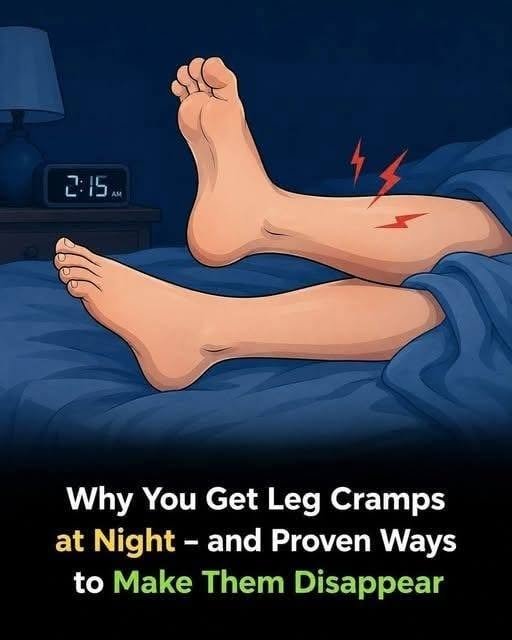
🌙 Why Do We Get Cramps at Night?
Nighttime leg cramps are sudden, involuntary muscle contractions—most often affecting the calf or foot. They’re extremely common, particularly as people get older.
Common reasons
- Muscle fatigue or overuse: A hard workout, prolonged standing, or unusual physical activity can leave muscles more prone to cramping.
- Reduced activity: Spending much of the day sitting can contribute to muscle and tendon changes that increase susceptibility.
- Age-related changes: Night cramps become more common with increasing age.
- Certain medications: Some medicines, including diuretics and certain cholesterol-lowering drugs, can be associated with cramps.
- Dehydration or electrolyte disturbances: Fluid and mineral abnormalities can contribute in some cases, although not every nighttime cramp is caused by a lack of electrolytes.
- Underlying conditions: Nerve disorders, circulation problems, kidney disease, diabetes, and thyroid problems can sometimes play a role.
- No identifiable cause: In many people, there is simply no clear underlying explanation.
What to do when a cramp happens
Gently stretch and massage the affected muscle. For a calf cramp, try straightening the leg and gently pulling the toes toward your face. Standing and putting weight on the leg may also help if it’s safe for you.
Regular calf stretching and staying physically active may reduce recurrent cramps for some people.
Should you take magnesium?
Not automatically. Magnesium supplements aren’t a universal cure for nighttime cramps, and excessive supplementation can cause diarrhea and other problems. It’s better to discuss recurrent cramps with a healthcare professional before taking high doses.
🚨 Get medical attention if cramps are frequent or severe, or occur with persistent swelling, weakness, numbness, redness, or skin changes. Sudden swelling and pain in one leg—especially with chest pain or shortness of breath—requires urgent evaluation.
Bottom line: Night cramps aren’t necessarily a sign that you’re missing a particular vitamin or mineral. They often have multiple possible causes, and persistent cramps are worth investigating rather than self-treating with supplements.