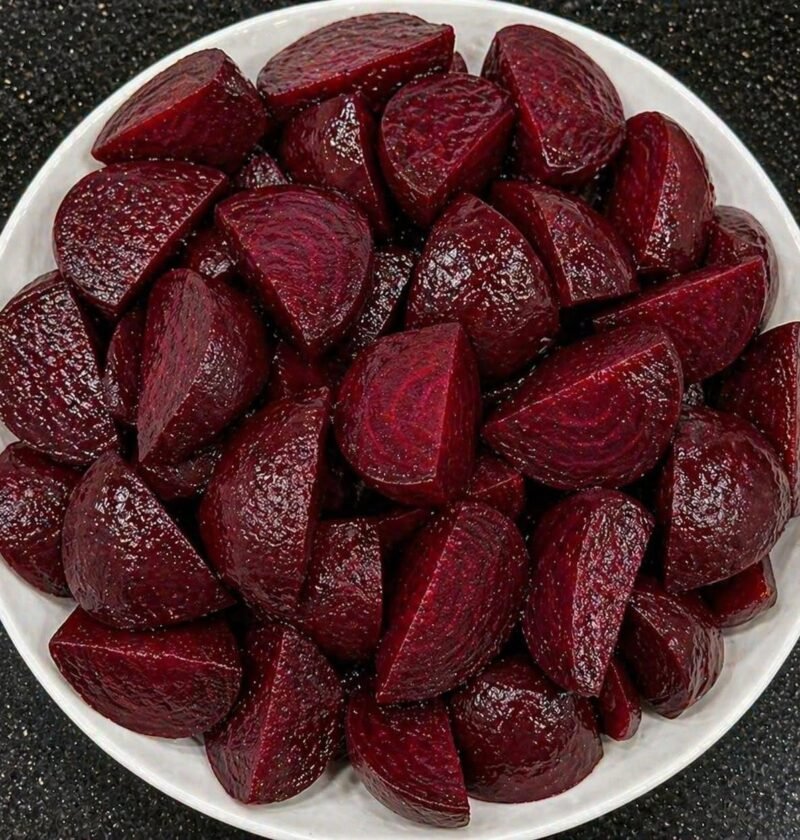
If you mean the viral-style claim “Doctors reveal eating beets causes…”, the most notable effect is that beets can turn your urine or stool pink/red. This is called beeturia and is usually harmless. The red pigment, betanin, can pass through the digestive system and, in some people, be filtered into the urine. (Cleveland Clinic)
What eating beets can do
- 🟥 Red or pink urine: This happens in a minority of people after eating beets and is generally harmless. (Cleveland Clinic)
- 🟥 Reddish stool: This is more common because beet pigments can remain in the digestive tract. (Cleveland Clinic)
- ❤️ May modestly lower blood pressure: Beets are rich in dietary nitrates, which can increase nitric-oxide availability. Clinical trials and meta-analyses have found reductions in systolic blood pressure, although the evidence isn’t uniform and the effect varies between people. (PubMed)
- 🥗 Provides useful nutrients: Whole beets provide fiber and several vitamins, minerals and plant compounds.
When red urine shouldn’t be ignored
If you haven’t eaten beets or another red-pigmented food, red urine could represent blood and should be medically evaluated. Even after eating beets, seek medical advice if the discoloration persists beyond about 48 hours, or if you have pain or burning when urinating. (Cleveland Clinic)
So the dramatic headline “eating beets causes red urine” is technically true—but in most cases, it’s a harmless pigment effect rather than bleeding.