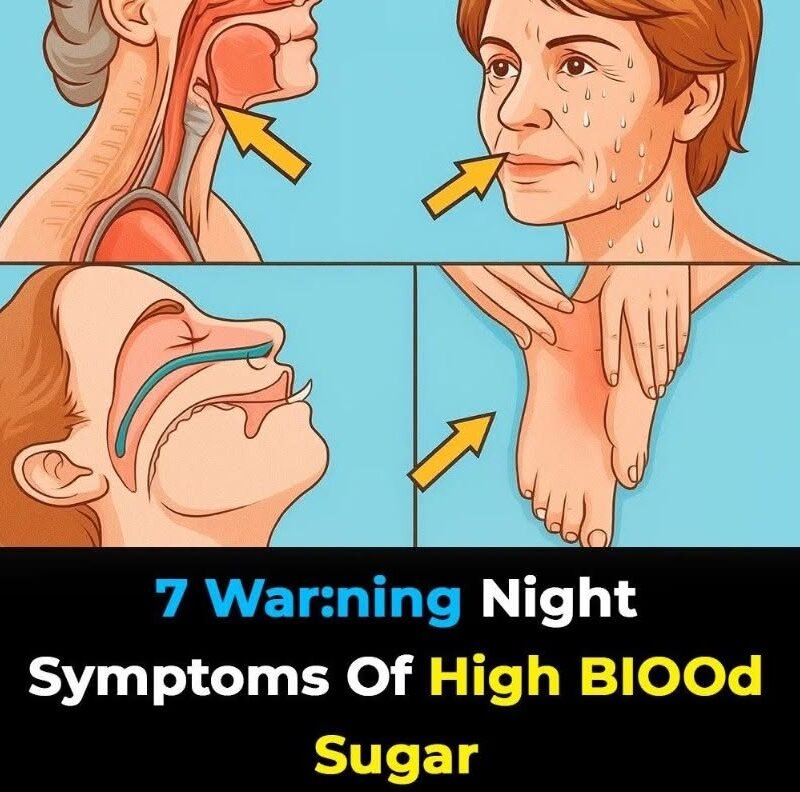
7 Warning Night Symptoms of High Blood Sugar
High blood sugar (hyperglycemia) can sometimes become more noticeable at night. These symptoms don’t prove that your blood sugar is high—many have other causes—but if they happen repeatedly, checking your glucose and discussing the pattern with a healthcare professional can be useful.
1. 🚽 Waking up frequently to urinate
When blood glucose becomes high enough, the kidneys try to remove excess glucose through urine. This draws additional water with it, potentially causing frequent urination (polyuria).
If you’re repeatedly getting up several times each night to urinate, don’t automatically assume it’s just aging.
2. 🥤 Intense thirst at night
Frequent urination can contribute to dehydration, leading to increased thirst or a dry mouth.
If you’re constantly reaching for water during the night, particularly together with frequent urination, consider checking your blood glucose.
3. 😴 Restless or poor-quality sleep
High glucose and the resulting thirst or urination can repeatedly interrupt sleep. Some people may wake feeling unrefreshed even after spending enough time in bed.
Of course, insomnia has many possible causes, so this symptom alone isn’t specific to diabetes.
4. 🌙 Night sweats or unusual sweating
Sweating at night is not a classic or specific sign of high blood sugar. In people using insulin or certain glucose-lowering medications, however, sweating can be a warning sign of low blood sugar, which is an important distinction.
If you wake sweaty, shaky, confused, or with a racing heart, check your glucose if you can and follow your prescribed hypoglycemia plan.
5. 👄 Dry mouth
Dehydration associated with elevated glucose can leave your mouth unusually dry or sticky.
Persistent dry mouth can also result from medications, mouth breathing, dehydration, and other conditions.
6. 😵 Morning headache or fatigue
Poor sleep and dehydration can contribute to morning headaches and tiredness. If these occur repeatedly along with thirst and nighttime urination, it may be worth discussing glucose testing with your clinician.
7. 👁️ Blurred vision
Significant changes in blood glucose can temporarily affect the eye’s focusing ability, causing blurred vision.
New or persistent vision changes should be medically evaluated rather than automatically attributed to blood sugar.
🚨 When high blood sugar becomes an emergency
Very high blood glucose can lead to serious complications.
Seek urgent medical care if high glucose is accompanied by vomiting, abdominal pain, rapid or difficult breathing, fruity-smelling breath, severe dehydration, confusion, extreme drowsiness, or loss of consciousness. These can be signs of diabetic ketoacidosis or another serious hyperglycemic emergency.
What should you do if these symptoms keep happening?
If you have a glucose meter or continuous glucose monitor, check your glucose according to your healthcare professional’s recommendations and record when symptoms occur and what your readings are.
If you don’t have diagnosed diabetes but repeatedly experience excessive thirst, frequent urination, unexplained weight loss, fatigue, or blurred vision, arrange a medical evaluation.
Bottom line: Nighttime thirst and frequent urination can be clues to elevated blood sugar, but symptoms alone can’t diagnose hyperglycemia. A blood glucose test and appropriate medical evaluation are far more reliable than trying to identify diabetes from symptoms alone.